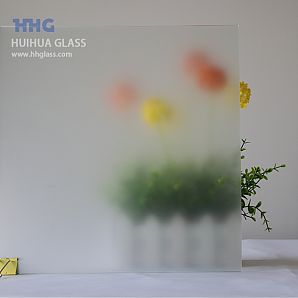
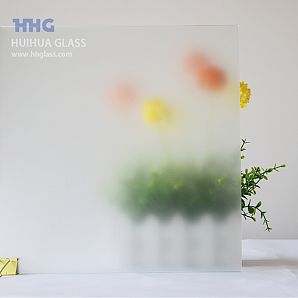
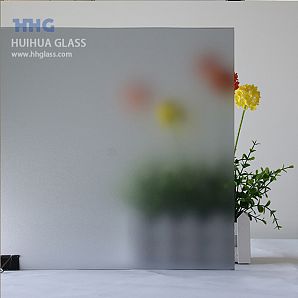
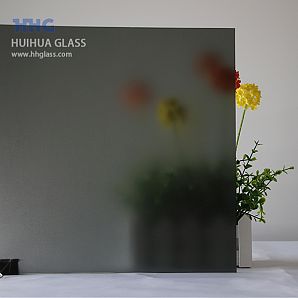
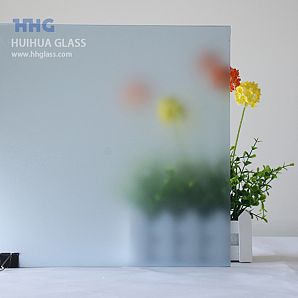
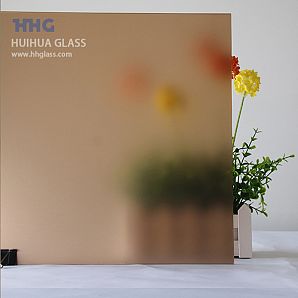
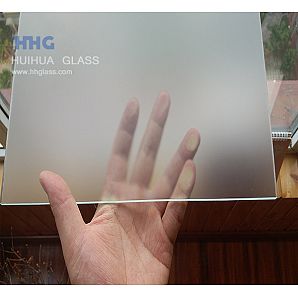
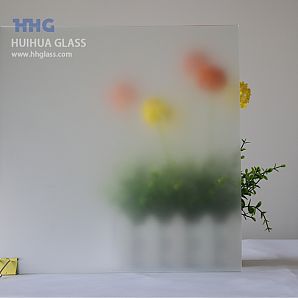
Acid etched glass, also known as frosted glass, satin glass, or decorative etched glass, is a specialty glass product created by chemically treating the surface of glass to produce a smooth, translucent, and matte finish. Unlike traditional clear glass, acid etched glass diffuses light, reduces glare, and provides privacy while maintaining a modern and elegant appearance.
With its combination of functionality and aesthetics, acid etched glass has become widely used in architectural, commercial, and interior design applications, including glass doors, office partitions, shower enclosures, furniture, facades, and decorative panels.
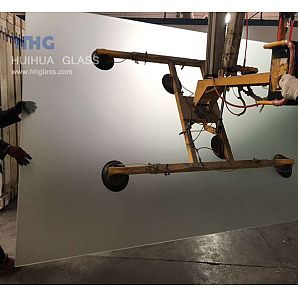
What Is Acid Etched Glass?
Acid etched glass is a type of decorative glass produced by applying an acid treatment—typically involving hydrofluoric acid—to the surface of glass. The chemical process removes a very thin layer from the glass surface, creating microscopic textures that scatter light and produce a soft matte appearance.
Compared with ordinary transparent glass, acid etched glass offers:
A smooth frosted surface
Improved privacy
Soft light diffusion
Reduced reflections and glare
Elegant decorative effects
The etching process permanently changes the glass surface, meaning the matte finish will not peel, fade, or wear away like surface films or coatings.
How Is Acid Etched Glass Made?
The manufacturing process of acid etched glass involves several carefully controlled steps.
1. Glass Selection
Acid etched glass is usually produced from high-quality float glass. Float glass provides:
Uniform thickness
Excellent flatness
High optical clarity
Stable physical performance
Depending on project requirements, manufacturers can use different glass types, including:
Clear float glass
Low iron glass
Colored glass
Tempered glass
Laminated glass
2. Surface Cleaning and Preparation
Before acid treatment, the glass surface must be thoroughly cleaned to remove:
Dust
Oil contamination
Fingerprints
Surface impurities
A clean surface ensures consistent etching results and a uniform matte finish.
3. Acid Etching Process
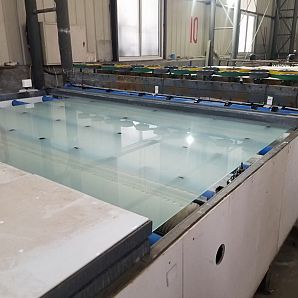
During the acid etching process, the exposed glass surface reacts with chemical agents, usually hydrofluoric acid, which dissolves a microscopic layer of silica from the glass.
The depth and appearance of the etching depend on:
Acid concentration
Treatment time
Glass composition
Surface protection methods
Manufacturers can control the process to achieve different levels of transparency, from lightly frosted surfaces to more opaque finishes.
4. Washing and Finishing
After etching, the glass is carefully washed and neutralized to remove chemical residues.
The final surface has:
A smooth satin texture
Uniform appearance
Improved fingerprint resistance
Stable long-term performance
Unlike sprayed coatings, acid etching becomes part of the glass surface itself, providing excellent durability.
Key Features and Advantages of Acid Etched Glass
1. Excellent Privacy Protection
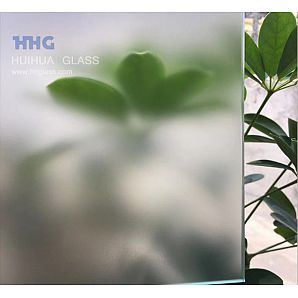
One of the biggest advantages of acid etched glass is its ability to provide privacy while still allowing natural light to pass through.
The frosted surface reduces visibility by scattering light, making it difficult to see clear images through the glass.
It is ideal for:
Bathroom windows
Office partitions
Meeting rooms
Interior doors
Medical facilities
This makes acid etched glass a perfect alternative to curtains or blinds in many applications.
2. Soft and Even Light Diffusion
Acid etched glass changes the way light travels through the surface.
Instead of creating harsh reflections or direct transparency, it produces:
Soft lighting effects
Reduced glare
Comfortable visual environments
This feature is especially valuable in modern architectural designs where natural lighting is important.
3. Elegant Decorative Appearance
The satin-like finish gives acid etched glass a premium and contemporary appearance.
Designers use it to create:
Minimalist interiors
Luxury spaces
Modern architectural features
It can also be combined with patterns, logos, colors, and custom designs to create unique decorative effects.
4. Easy Maintenance and Fingerprint Resistance
Compared with sandblasted glass, acid etched glass has a smoother surface that is easier to clean.
Benefits include:
Less visible fingerprints
Reduced dirt accumulation
Lower maintenance requirements
This makes it suitable for high-traffic environments such as commercial buildings and public spaces.
5. Durable and Long-Lasting Surface
Because acid etching chemically modifies the glass surface, the finish is permanent.
Advantages include:
No peeling
No fading
High resistance to daily wear
Suitable for long-term architectural use
The glass can also be further processed through cutting, tempering, laminating, and insulating.
Acid Etched Glass vs Sandblasted Glass
Acid etching and sandblasting are two common methods used to create frosted glass effects. Although they produce similar appearances, their manufacturing processes and surface characteristics are different.
| Feature | Acid Etched Glass | Sandblasted Glass |
|---|---|---|
| Process | Chemical treatment | Abrasive blasting |
| Surface | Smooth satin finish | Rougher matte finish |
| Cleaning | Easier | More likely to collect dirt |
| Durability | Permanent surface change | May require additional protection |
| Design Use | Full surface frosting and patterns | Partial designs and logos |
Acid etched glass is often preferred for large architectural surfaces because of its smooth appearance and easy maintenance. Sandblasting is commonly selected for custom graphics, logos, and localized designs.
Types of Acid Etched Glass
1. Single-Sided Acid Etched Glass
Only one side of the glass is treated.
Features:
One matte surface
One smooth surface
Good light diffusion
Applications:
Doors
Partitions
Decorative panels
2. Double-Sided Acid Etched Glass
Both sides of the glass receive etching treatment.
Advantages:
Enhanced privacy
Consistent appearance
Greater decorative effect
Common uses:
High-end interior walls
Office partitions
Architectural projects
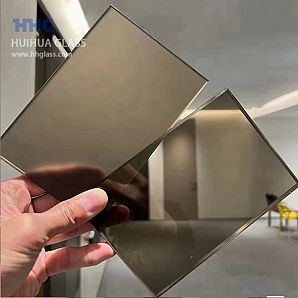
3. Colored Acid Etched Glass
Acid etching can be applied to colored glass, including:
Bronze glass
Gray glass
Blue glass
Green glass
This creates additional design possibilities for luxury interiors.
4. Patterned Acid Etched Glass
Manufacturers can create customized designs using protective masking techniques.
Examples:
Lines
Geometric patterns
Logos
Decorative graphics
This allows designers to combine privacy, branding, and aesthetics.
Applications of Acid Etched Glass
1. Glass Doors
Acid etched glass is widely used for interior and commercial doors.
Benefits:
Provides privacy
Allows light transmission
Creates modern appearance
Applications include:
Office doors
Hotel doors
Bathroom doors
Residential entrances
2. Office Partitions
Modern offices increasingly use glass partitions to create open but private workplaces.
Acid etched glass provides:
Natural light sharing
Visual separation
Professional appearance
It is commonly used in:
Meeting rooms
Conference rooms
Corporate offices
3. Shower Enclosures
In bathrooms, acid etched glass provides privacy while maintaining brightness.
Advantages:
Moisture resistance
Easy cleaning
Elegant appearance
It creates a more comfortable and stylish bathroom environment.
4. Architectural Facades
Acid etched glass can be used in building exteriors to control transparency and light.
Applications include:
Commercial buildings
Public facilities
Modern architectural projects
5. Furniture and Interior Decoration
Acid etched glass is also popular in furniture design.
Applications:
Cabinet doors
Table tops
Shelves
Decorative panels
The matte surface adds texture and sophistication to interior spaces.
How to Choose the Right Acid Etched Glass?
When selecting acid etched glass, consider the following factors:
Glass Thickness
Common thickness options include:
3mm
4mm
5mm
6mm
8mm
10mm
12mm
The thickness depends on structural requirements and installation conditions.
Transparency Level
Different projects require different privacy levels:
Light etching for soft diffusion
Medium etching for balanced privacy
Heavy etching for maximum obscurity
Safety Requirements
For applications such as doors, shower screens, and partitions, safety glass options should be considered.
Available solutions include:
Tempered acid etched glass
Laminated acid etched glass
Insulating acid etched glass units
Conclusion
Acid etched glass is a versatile material that combines privacy, light diffusion, durability, and decorative appeal. Through a controlled chemical etching process, ordinary clear glass is transformed into a smooth satin-finished material suitable for modern architecture and interior design.
From office partitions and shower enclosures to furniture and commercial buildings, acid etched glass provides an elegant solution where natural light, privacy, and aesthetics are equally important.
With customizable finishes, patterns, thicknesses, and processing options, acid etched glass continues to be a popular choice for architects, designers, and glass manufacturers worldwide.
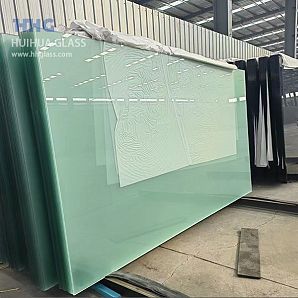
HHG is a professional glass manufacturer and glass solution provider, including a range of tempered glass, Restoration Glass, laminated glass, textured glass, and etched glass, with more than 20 years of development. There are two production lines for pattern glass, two lines for float glass, and one line for restoration glass. Our products 80% ship to overseas. All our glass products have strict quality control and are carefully packed in strong wooden cases. Ensure you receive the finest quality glass safely in time.
More Details: www.hhglass.com