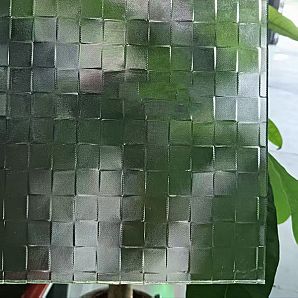
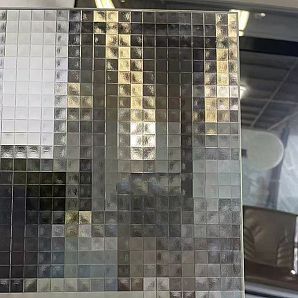
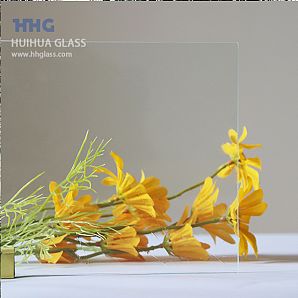
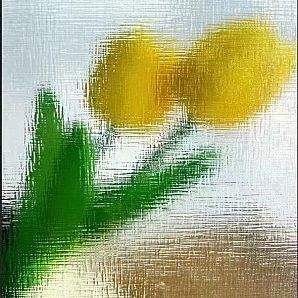
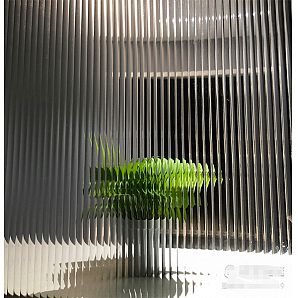
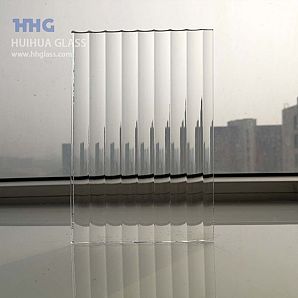
Patterned glass, also known as textured glass, figured glass, or decorative rolled glass, is a type of flat glass with embossed designs on one or both surfaces. It is widely used in architecture, interior design, furniture, and construction due to its ability to balance privacy, light transmission, and aesthetics.
Unlike clear float glass, patterned glass does not allow direct visibility. Instead, it diffuses light and partially obscures objects behind it, making it ideal for spaces that require both brightness and privacy.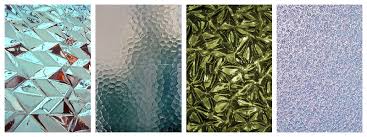
1. What is Patterned Glass?
Patterned glass is produced by pressing molten glass through specially designed rollers that imprint textures onto the surface. These patterns can range from simple lines and waves to complex geometric, floral, or abstract designs.
The result is a semi-transparent glass that maintains natural light flow while reducing visibility. This makes it a functional and decorative material widely used in modern and traditional architecture alike.
Patterned glass is commonly used in:
Doors and windows
Bathroom partitions
Office dividers
Furniture panels
Decorative architectural surfaces
2. How Patterned Glass is Manufactured
The production of patterned glass follows a controlled industrial process:
(1) Raw Material Preparation
High-quality raw materials such as silica sand, soda ash, and limestone are mixed to form a glass batch.
(2) Melting
The mixture is heated in a furnace at around 1,600°C until it becomes molten glass.
(3) Rolling and Pattern Formation
The molten glass is poured between rollers, one or both of which contain engraved patterns. As the glass passes through, the texture is permanently imprinted onto its surface while thickness is controlled.
(4) Annealing
The glass is gradually cooled in an annealing furnace to remove internal stress and improve durability.
(5) Cutting and Processing
Once cooled, the glass is cut into sheets and may be further processed into:
Tempered glass (for strength)
Laminated glass (for safety)
Insulated glass units (for energy efficiency)
3. Core Features of Patterned Glass
3.1 Privacy with Natural Light
The main advantage of patterned glass is its ability to provide privacy without blocking daylight. The textured surface scatters light, making objects behind it unclear while still allowing illumination to pass through.
This makes it ideal for bathrooms, offices, and residential partitions.
3.2 Light Diffusion and Visual Comfort
Instead of harsh direct light, patterned glass creates a soft, diffused lighting effect. This improves visual comfort and reduces glare, especially in interior environments.
3.3 Decorative Aesthetic Value
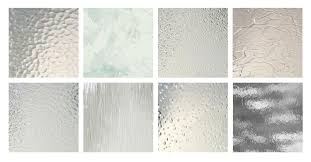
Patterned glass is also a design material. It adds texture, depth, and visual interest to architectural spaces. Patterns can be:
Linear or striped
Geometric (diamond, grid, ripple)
Floral or artistic
Frosted or abstract
This versatility allows designers to match different interior styles from modern minimalism to classic décor.
3.4 Structural Versatility
Patterned glass can be used in multiple structural forms:
Tempered for safety and impact resistance
Laminated for security and sound insulation
Double-glazed for thermal performance
This makes it suitable for both decorative and functional applications.
3.5 Consistent Light Transmission
Despite its textured surface, patterned glass still allows good light transmission—typically only slightly lower than clear glass—making it practical for daylight-dependent spaces.
4. Types of Patterned Glass
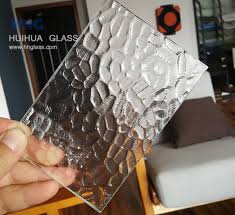
Patterned glass comes in a wide range of styles depending on roller design and manufacturing techniques:
Linear patterns – simple stripes or grooves
Geometric patterns – squares, diamonds, grids
Floral patterns – decorative nature-inspired designs
Prismatic patterns – light-bending textures for diffusion
Heavy obscure patterns – high privacy applications
Each pattern provides a different balance between visibility and light diffusion.
5. Applications of Patterned Glass
Patterned glass is widely used across residential, commercial, and industrial sectors:
5.1 Residential Applications
Bathroom windows
Shower doors
Kitchen cabinet glass
Interior doors
Balcony partitions
5.2 Commercial Applications
Office partitions
Meeting rooms
Hotel interiors
Retail display areas
Reception partitions
5.3 Architectural Applications
Facades and skylights
Staircase enclosures
Decorative walls
Entry doors and sidelights
5.4 Furniture Design
Glass cabinet doors
Table panels
Wardrobe inserts
Decorative shelving
Its flexibility makes it a preferred material in both functional and decorative construction projects.
6. Advantages of Patterned Glass
6.1 Privacy Enhancement
It obscures direct visibility while maintaining daylight, making it ideal for private yet bright environments.
6.2 Aesthetic Enhancement
Patterned glass elevates simple spaces into visually appealing environments through texture and design.
6.3 Energy Efficiency Support
By diffusing sunlight, it reduces glare and helps distribute natural light more evenly indoors, reducing reliance on artificial lighting.
6.4 Durability Options
When tempered or laminated, patterned glass becomes highly resistant to impact, thermal stress, and breakage.
6.5 Design Flexibility
Available in many patterns and thicknesses (typically 3–5 mm or more depending on application), it can be customized for different architectural needs.
7. Safety and Performance Considerations
Tinted texture glass shares similar chemical properties with standard float glass, but its surface texture influences optical behavior and mechanical processing.
Some patterns are more suitable for tempering than others due to thickness variations in the texture. In safety-critical applications, manufacturers often select specific patterns designed for better thermal stability.
It can also be laminated with interlayers for enhanced safety performance in doors, facades, and public buildings.
8. Design and Industry Trends
Modern architecture increasingly uses patterned glass due to its combination of functionality and aesthetics. Current trends include:
Minimalist patterns for modern interiors
Large-scale glass partitions in offices
Decorative privacy solutions in urban housing
Combination with smart glass technologies
Integration into energy-efficient building systems
Patterned glass continues to evolve with improvements in manufacturing precision, pattern variety, and safety processing.
Conclusion
Patterned glass is a highly versatile architectural material that combines privacy, natural light diffusion, durability, and decorative value. Manufactured through a precise rolling process, it offers a wide range of textures and functional benefits suitable for residential, commercial, and industrial use.
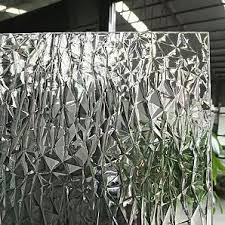
HHG is a professional glass manufacturer and glass solution provider, including a range of tempered glass, laminated glass, textured glass, and etched glass, with more than 20 years of development. There are two production lines for pattern glass, two lines for float glass, and one line for restoration glass. Our products 80% ship to overseas. All our glass products have strict quality control and are carefully packed in strong wooden cases. Ensure you receive the finest quality glass safely in time.
More Details: www.hhglass.com